
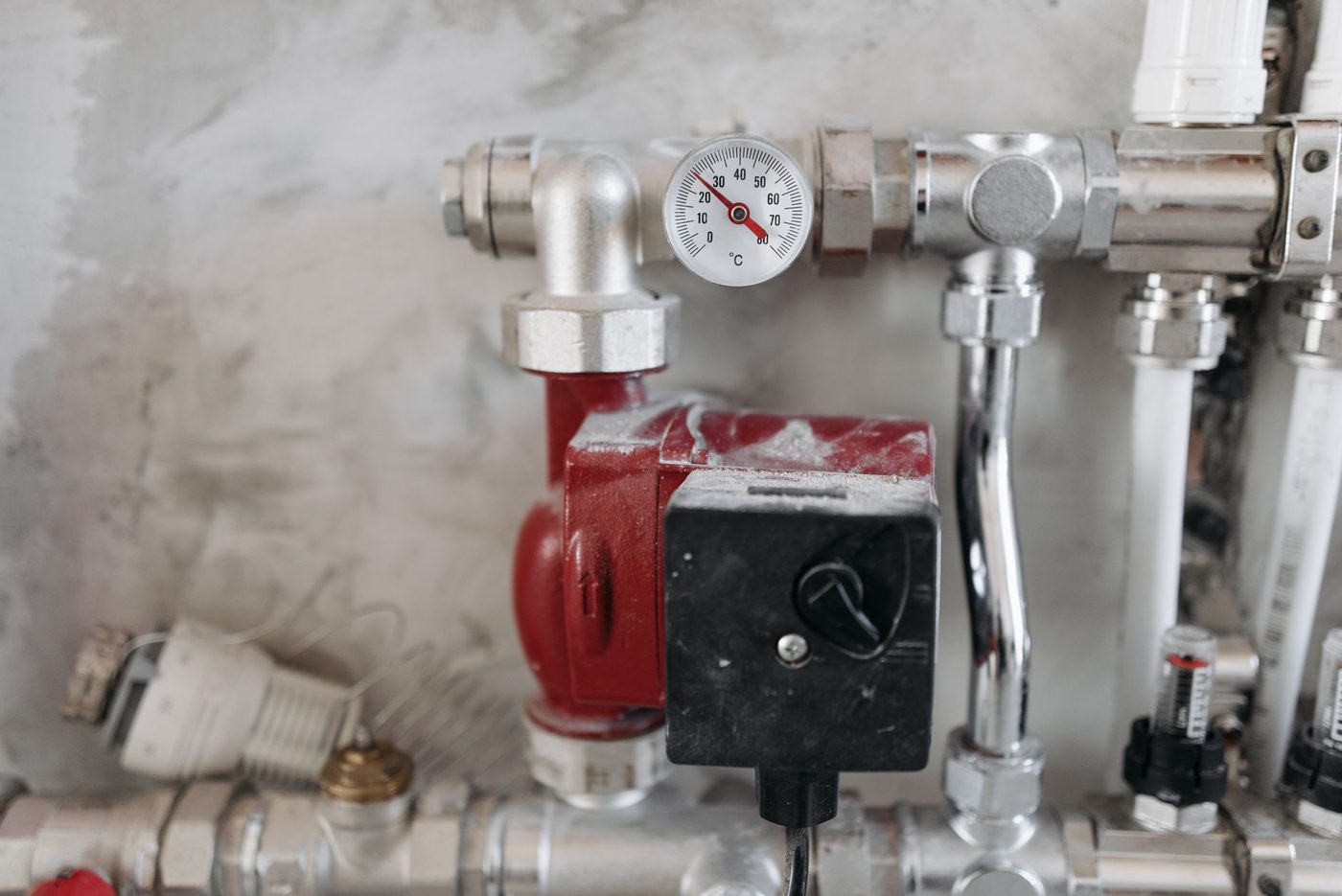
A government scheme ties boiler makers’ sales to heat pump targets. The GOV.UK pages describe duties for manufacturers.
In this guide
The Clean Heat Market Mechanism (CHMM) is a UK scheme that puts an obligation on manufacturers supplying gas and oil boilers. This guide summarises two GOV.UK guidance pages, one on who it applies to and one on boiler sales, targets and credits, plus the GOV.UK pages on enforcement and on a consultation, all read on 2 November 2026. The pages read are addressed to the businesses the scheme covers. General information, not legal advice.
Three terms the scheme uses
GOV.UK says the CHMM supports the development of low-carbon electric heat pumps. It places an obligation on manufacturers supplying gas and oil boilers in the UK market, who must meet targets for the installation of heat pumps in existing properties in proportion to their qualifying sales of fossil fuel boilers. A manufacturer can do this by supplying heat pumps itself or by getting credits from other manufacturers.
- Scheme participant: a company or group with an obligation and a target.
- Near-threshold supplier: a company or group in a band just below the participant threshold, which registers and reports but has no target.
- Credit holder: a supplier of qualifying heat pumps, with no obligation.
The thresholds that decide which
The guidance says the scheme applies to a business that both manufactures, or has someone manufacture for it, fossil fuel boilers or heat pumps, and owns the right to use the brand name or trademark used to market them in the UK. It runs from 1 April 2025 until at least 2029, applies to the whole of the UK, and is administered by the Environment Agency. The Clean Heat Market Mechanism Regulations 2025 set out its obligations.
- A scheme participant supplies on or for the UK market, in a relevant sales year, 20,000 or more gas boilers or 1,000 or more oil boilers.
- A near-threshold supplier supplies between 15,000 and 19,999 gas boilers, or between 750 and 999 oil boilers.
- Small companies or groups, as defined in the Companies Act 2006, are not scheme participants or near-threshold suppliers.
What the scheme does not apply to
The guidance lists three exclusions: gas and oil boilers over 70 kilowatt thermal capacity, boilers that can be proven to have been or to be exported outside the UK, and boilers that can be proven to be installed in new build properties, meaning properties not used or occupied before installation. For exports and new builds, the page says evidence is required for each excluded sale.
How a target is worked out
A scheme participant’s low-carbon heat target is a percentage of its qualifying boiler sales above the thresholds. The regulations give 6% for Year 1 (2025) and 8% for Year 2 (2026), applied to gas boiler sales above 19,999 and oil boiler sales above 999. The percentages for future scheme years are set by the Secretary of State.
GOV.UK gives a worked example: qualifying sales of 30,000 gas boilers and 2,000 oil boilers give (10,001 + 1,001) × 6% = 660.12, so a target of 660 after rounding to the nearest whole number.
How a heat pump credit is earned
The Microgeneration Certification Scheme (MCS) is the only approved certification scheme. A credit comes from a certified retrofit installation recorded on the scheme’s registry. The qualifying installation of one standalone heat pump leads to one credit, and of a hybrid heat pump to half a credit. A credit holder is a supplier of a heat pump that meets the guidance’s criteria, which include MCS accreditation, a capacity under 45 kilowatt thermal and supplying space heating through a water-based system.
What happens if a deadline is missed
GOV.UK says a manufacturer to which the scheme applies and which does not comply may face enforcement action, which could be a civil penalty or criminal prosecution. One example on the boiler sales page is a civil penalty of up to £50,000 plus £500 per additional day of delay for not submitting the annual notification by 30 June. Decisions including a penalty notice can be appealed to the General Regulatory Chamber of the First-tier Tribunal.
What the October 2026 consultation covers
A consultation first published on 12 October 2026 seeks views on government proposals to extend the regulations until 2032 and on the design of years 3 to 6, including heat pump credit targets, credits for heat pump installations in new build properties and support through credits for investment in UK and/or sustainable manufacturing. These are proposals, not rules.
FAQs
Does the CHMM ban gas boilers?
The pages read describe an obligation on manufacturers to meet heat pump targets in proportion to their qualifying boiler sales. They do not describe a ban. The guide on the Future Homes Standard covers a separate set of rules.
Does it place any duty on householders or installers?
The pages read set out duties for manufacturers and the Environment Agency. They do not describe a duty on householders or installers.
The bottom line
GOV.UK describes the Clean Heat Market Mechanism as an obligation on manufacturers supplying gas and oil boilers in the UK, with targets tied to qualifying boiler sales above stated thresholds and met through MCS-certified heat pump installations or credits. Export and new build sales, and boilers over 70 kilowatt, are excluded. Year 2 is set at 8%, later years are for the Secretary of State to set, and a consultation on extending the scheme to 2032 was published in October 2026. The guidance read is addressed to the businesses covered, so any effect on a householder’s own boiler purchase is not described there. General information, not personalised advice.
Sources
This guide draws on the following primary sources, read on 2 November 2026:
- Clean Heat Market Mechanism: who it applies to, annual tasks (GOV.UK, page updated 22 December 2025) (gov.uk)
- Clean Heat Market Mechanism: fossil fuel boiler sales, targets and credits (GOV.UK, page updated 1 April 2026) (gov.uk)
- Clean Heat Market Mechanism: compliance, enforcement and appeals (GOV.UK, page updated 22 December 2025) (gov.uk)
- Clean Heat Market Mechanism: revisions ahead of the 2027/28 scheme year (GOV.UK consultation, first published 12 October 2026) (gov.uk)
Related guides
Boiler Upgrade Scheme
Hybrid systems
MCS certification
Best Boiler Deals is an independent guide. We may earn a fee from some links; this never affects what we write. This article is general information, not regulated advice on any specific installation; always confirm the details with a Gas Safe registered engineer.