
- Home
- Choosing a Boiler
- Combi vs system vs regular
Combi vs System vs Regular Boiler: Which Is Right for Your Home?
How to choose between combi, system and regular boilers using bathroom count, a ten-minute mains flow rate test and correct sizing rather than brand or price.
In this guide
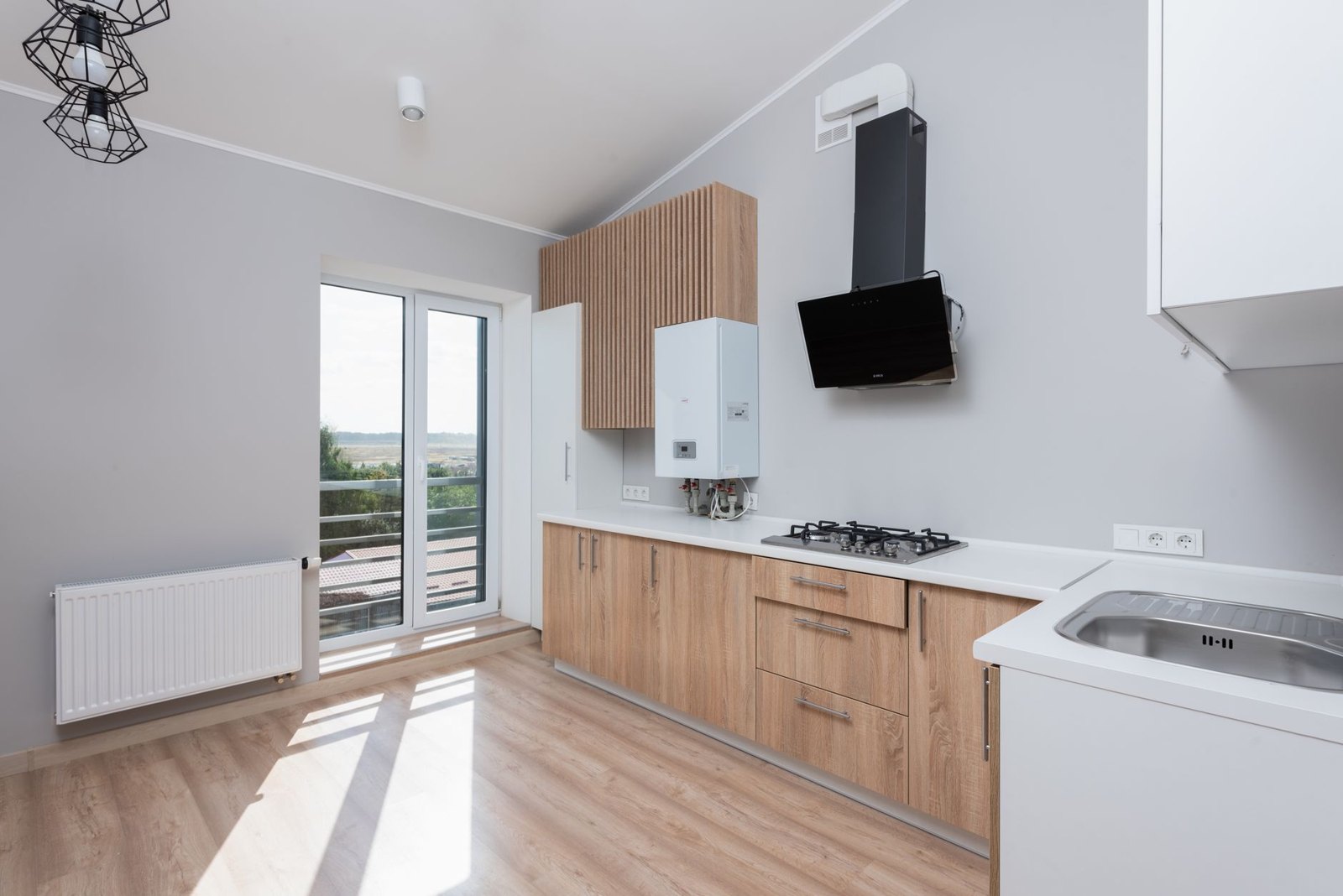
If you are replacing a boiler, the first decision is not a brand. It is which of the three main types actually suits your home. Get this wrong and you will either overpay for capacity you do not need, or end up with weak hot water in a busy household. The deciding factors are your bathroom count, your mains water pressure and flow rate, and whether you have space for a cylinder. Here is the difference, in plain English.
Combi boilers
A combi (combination) boiler heats water directly from the mains, on demand, with no separate hot water cylinder or cold water tank. That makes it the most popular choice in the UK for flats and small-to-medium houses. It is compact, often cheaper to install because there is usually less pipework and no tank taking up loft or airing-cupboard space, although the saving depends on your existing system and the work needed, and you get hot water at mains pressure without waiting for a cylinder to reheat.
The trade-off: because it is heating water on the fly, a combi can struggle if two outlets run at once, such as a shower and a kitchen tap, and it is not usually the best fit for a house with several bathrooms wanting hot water simultaneously.
Combi hot water performance depends heavily on the incoming mains supply, as well as on the boiler’s own hot water output. A combi rated for a high flow rate cannot deliver more water than your mains can supply it, which is why the flow rate test below matters more than the specification sheet.
More on combi boilers and where they fit.
System boilers
A system boiler has most of its major components, such as the pump and the expansion vessel, built into the unit itself, and heats water into a separate hot water cylinder rather than instantly. That cylinder gives you a store of hot water ready to draw from multiple taps or bathrooms at once, and it copes better with simultaneous demand than a combi because the water is already heated, although an unvented cylinder is still fed from the mains, so a weak mains supply can still limit flow.
You need space for the cylinder, often an airing cupboard. And because it is stored hot water rather than instant, you can run out if demand outpaces the tank, though a cylinder should be sized for your household’s expected hot water demand, so ask how the size was chosen. Recovery time, meaning how quickly the cylinder reheats, is worth asking about if your household showers back to back in the mornings.
More on system boilers and cylinder sizing.
Regular (conventional) boilers
A regular boiler is the traditional setup: a boiler, a separate hot water cylinder, and a cold water storage tank, usually in the loft. It is often the sensible choice for older properties that already have this system installed. It can also suit homes with low mains pressure, where a combi would perform poorly, and larger homes with several bathrooms, although a system boiler may work too, so ask your installer.
The downside is space. You need room for both a cylinder and a loft tank. Because the system is gravity-fed, pressure at the taps can be lower than a combi or system setup unless a pump is added.
There is a common assumption that any boiler replacement means converting to a combi. It does not. Converting from a regular system means removing tanks, rerouting pipework and making good afterwards, and that work can add substantially to a quote. If your existing system works and the property suits it, a like-for-like replacement is often both cheaper and less disruptive.
More on regular and conventional boilers.
The test to do before you choose
Mains water pressure and flow rate matter more than most householders realise. You can get a rough idea of your flow rate in about ten minutes with a bucket and a stopwatch, but that test does not measure pressure, and it is only a guide, not a substitute for the installer’s own measurements.
The ten-minute flow rate check
- Take a container of known volume. A 10-litre bucket is ideal.
- Run the kitchen cold tap fully open.
- Time how long the container takes to fill.
- Divide the volume by the time in minutes. Ten litres in 45 seconds is roughly 13 litres per minute.
That figure is a rough guide to your practical ceiling; flow can be lower at busy times of day. A combi cannot deliver more hot water than your mains can supply, regardless of the boiler’s rating. If your flow rate or pressure is low, a combi is likely to disappoint whatever its rating, and a stored-water system is usually the better route. An installer should measure your mains pressure and flow rate on a site visit before recommending a type. If a quote arrives without one, ask why.
Sizing: bigger is not safer
Boiler output is measured in kilowatts, and there is a persistent assumption that a larger output is a safer choice. In practice an oversized boiler is more likely to short-cycle, firing and stopping repeatedly rather than running steadily, which wastes gas and wears parts. Separately, a condensing boiler only reaches its best efficiency when it runs at low enough water temperatures to condense, and a correctly sized boiler that can modulate down to your home’s heat demand makes both problems easier to avoid.
Sizing should follow from a heat loss calculation based on your property’s construction, insulation, window area and radiator output, plus your hot water demand. Ask any installer what their recommendation is based on. “It is what we normally fit for a house this size” is not a heat loss calculation.
So which one do you need?
| Your situation | Usually the best fit | Why |
|---|---|---|
| Flat or small house, one bathroom, good mains flow | Combi | Usually the simplest and cheapest to install; no tank space needed |
| Medium house, one or two bathrooms, decent mains pressure | System | Stored hot water without a loft tank; handles simultaneous use |
| Larger or older house, low mains pressure, existing tank and cylinder | Regular | Least disruptive like-for-like replacement; suits gravity-fed layouts |
| Two or more bathrooms used at the same time | System or regular | A combi often struggles to serve two outlets at once |
| Low measured flow rate or pressure (there is no single cut-off; ask your installer what the boiler you are quoted needs) | System or regular | A combi is limited by the mains supply regardless of its rating |
| No loft access and no airing cupboard | Combi | The only option that needs neither |
What else has to be fitted
Boiler Plus is a set of standards under the Building Regulations in England (see Approved Document L, Volume 1 and the GOV.UK space-heating standards consultation). It has applied since 6 April 2018 to boilers fitted or replaced in existing homes.
If a gas or oil boiler is fitted or replaced, the installer must fit a boiler interlock and time and temperature controls, if these are not already in place. A boiler interlock stops the boiler firing when there is no demand for heat.
A new gas boiler must have an ErP efficiency of at least 92% (Boiler Plus factsheet).
If the new boiler is a gas combi, the installer must also fit at least one extra energy saving measure. The four options are flue gas heat recovery, weather compensation, load compensation, or a smart thermostat with automation and optimisation. This extra measure applies to combi boilers only. It does not apply to system or regular boilers.
The installer chooses the measure that suits your home. Ask which one is proposed and why.
Scotland, Wales and Northern Ireland have their own building standards. If you live outside England, check the rules for your nation before you sign a quote.
Your installer must be Gas Safe registered. Ask to see their Gas Safe ID card and check the licence number on the register rather than relying on a logo. In England and Wales, the Gas Safe registered business must notify the installation to your local authority through the Gas Safe Register notification scheme within 30 days of completing the work. You should then receive a Building Regulations Compliance Certificate in the post from Gas Safe Register, usually within 10 to 15 working days. Keep it safe. You will need it if you sell or remortgage. Scotland and Northern Ireland have different notification rules.
Frequently asked questions
Can I convert from a regular boiler to a combi?
Usually yes, but it involves removing the cylinder and loft tank, rerouting pipework and making good afterwards. Whether it is worthwhile depends on your bathroom count and your measured mains flow rate. If your flow rate or pressure is low, converting to a combi may make your hot water worse, not better.
What size boiler do I need?
It depends on heat loss and hot water demand, not on floor area alone. A proper heat loss calculation accounts for construction, insulation, glazing and radiator output. Ask what your quoted output is based on before accepting it.
Do I need a new boiler or will a repair do?
One practical sign is when parts for your model become hard to get, rather than a round-number age, but weigh it alongside safety, repair costs and efficiency. Once manufacturer parts for your model become difficult to source, repairs get slower and more expensive, and a breakdown in January becomes a much bigger problem. See our guidance on repairs and breakdown cover.
How long does a boiler installation take?
A straightforward like-for-like swap is often done in a day, but it can take longer depending on the property and the system. Changing type, particularly converting to or from a combi, often takes two days or more, depending on the pipework, tank removal and making good involved. Ask for the expected duration in writing as part of the quote.
When is the best time to replace a boiler?
If you can plan it, before the heating season. Installers are usually less busy in the warmer months, so you have more time to compare quotes, but there is no guaranteed cheapest time. Engineers are more available, lead times are shorter and you are not making the decision under pressure. An emergency replacement in midwinter can cost more and limit your choice, because engineers are at their busiest and you have less time to compare quotes.
Sources
- Energy Saving Trust, boilers advice: Explains the combi, system and regular boiler types and names hot water use and available space as the deciding factors. Accessed 2026-09-06.
- Gas Safe Register, boiler appliance guide: Describes how a combi heats water directly from the mains without a separate cylinder or tank. Accessed 2026-09-06.
- Worcester Bosch, mains water pressure FAQ: Explains that dynamic mains pressure is lower than static pressure and limits the hot water a mains-fed system can deliver. Accessed 2026-09-06.
- Which?, how to buy the best boiler: Consumer guide to the three boiler types, including which homes suit system and regular boilers. Accessed 2026-09-06.
- Approved Document L, Volume 1 (England, 2021 edition incorporating 2023 amendments): Sets the minimum boiler efficiency, the boiler interlock and controls requirements, hot water sizing and the extra measure for gas combination boilers in existing dwellings. Accessed 2026-09-06.
- GOV.UK, raising product standards for space heating: Current government consultation summarising the Boiler Plus standards and explaining why oversized boilers are more likely to cycle. Accessed 2026-09-06.
- GOV.UK, Boiler Plus final policy (BEIS, 2017): The policy document behind Boiler Plus: in force from 6 April 2018 for boilers installed in existing dwellings in England, with the 92 per cent efficiency minimum and the combi-only additional measure. Accessed 2026-09-06.
- Gas Safe Register, Building Regulations Compliance Certificate: Explains that the registered business notifies the installation and that the certificate is posted to the householder, in England and Wales. Accessed 2026-09-06.
- Gas Safe Register, the Gas Safe ID card: Shows what to check on an engineer's ID card and how to verify the licence number on the register. Accessed 2026-09-06.
- Which?, signs you need a new boiler: Lists the warning signs that a boiler may need replacing and advises against replacing a boiler that still works well. Accessed 2026-09-06.
- Worcester Bosch, guarantee terms and conditions: Example manufacturer guarantee terms showing that annual servicing is a condition and that missing it may reduce or limit cover. Accessed 2026-09-06.
Related guides
Combi boilers
Where a combi fits, and where it struggles.
Read the guideSystem boilers
Cylinder sizing and recovery times.
Read the guideRegular boilers
Like-for-like replacements for older homes.
Read the guideNext step
Once you know which type suits your property, get three quotes against the same written specification so they are genuinely comparable. Our boiler options comparison sets out what each type costs to install and run, and our guidance on installation and replacement covers what should happen on the day. If your current boiler is working but ageing, annual servicing is usually a condition of the manufacturer’s warranty, so check your own warranty terms.
This guide describes how the three boiler types work and how to choose between them. It does not recommend specific models. Regulations, grant schemes and manufacturer specifications change. Confirm current requirements with a Gas Safe registered installer before committing to any installation. bestboilerdeals.com is an independent guide. We may earn a fee from some links or quote requests; this never affects what we write.